Halal Certification for Export Markets
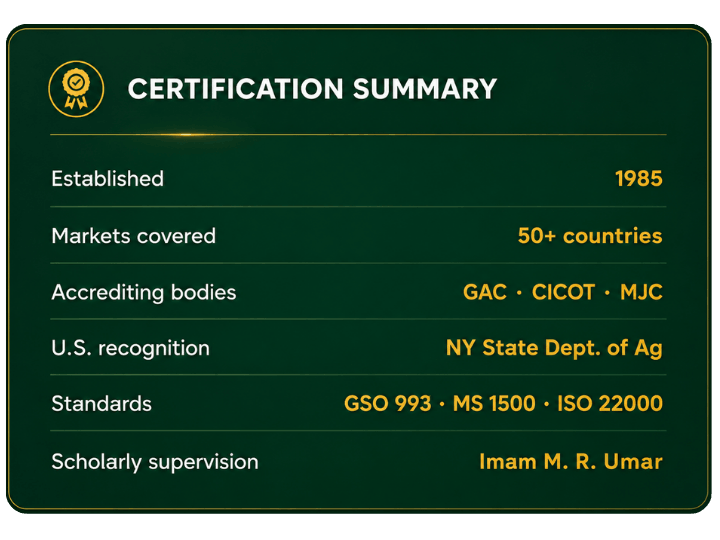
Exporting to Muslim-majority markets starts with the right certification scope at home. Halal Watch has served the halal industry since 1985 and has certified U.S. businesses since 1990, with market-specific planning for the destination, product, facility, and importer.
Which Markets Require It
Halal import and buyer requirements are market-specific and can change. Identify the destination, product category, manufacturing facility, importer, and current competent-authority rules before deciding which certification and recognition pathway applies. Sources reviewed August 27, 2026.
Gulf Cooperation Council (GCC)
VERIFY COUNTRY & PRODUCTHalal Watch's GAC accreditation documents assessed competence within its accredited scope. Each GCC destination, product category, authority, importer, and certificate-registration process can apply current requirements, so acceptance must be confirmed before shipment.
Malaysia & Indonesia
JAKIM · BPJPHMalaysia uses current JAKIM foreign-certification-body recognition for applicable imports. Indonesia's current foreign halal institution framework is administered by BPJPH, not the former MUI-only process. Recognition scope and validity should be checked for the product and facility.
Thailand & Southern Africa
RECOGNITION IS SCOPE-SPECIFICHalal Watch maintains recognition records involving CICOT, MJC, and NIHT. These records can support an export review, but they do not replace the destination authority, buyer, product, facility, labeling, or importer checks required for a specific shipment.
United Kingdom & Europe
BUYER & PRODUCT REVIEWThe United Kingdom and European markets do not operate as one universal halal-recognition system. Confirm the product category, buyer or retailer specification, importer documentation, label use, and any destination-specific controls before relying on a certificate.
Which Standard Applies to You
Applicable standards and registration steps depend on the destination and product. Confirm the current authority requirement before the certification scope is finalized.
Malaysia applies its standards together with current JAKIM recognition and import controls. A standard reference alone does not establish certificate acceptance.
Product-specific UAE requirements may apply to food and non-food categories. Verify the current standard, authority, product registration, and labeling pathway.
HIPS may inform Halal Watch training and educational guidance. Standards issuance and controlled publications are managed through halalstandards.org.
Food-safety systems can support documented operations, but ISO 22000 is not a substitute for halal certification or destination-market acceptance.
Six Stages to Certification
Free Needs Assessment
Submit your product list, ingredient overview, facility details and target markets. Receive a no-obligation proposal within 24–48 hours.
Application & Documentation
Review the full list of required documents on our documentation requirements page before submitting.
Ingredient & Formula Review
Every ingredient reviewed under the supervision of Imam Mansoor Rafiq Umar against halal standards applicable to your target markets.
Facility Audit
On-site inspection of your facility, equipment, storage, and handling procedures by a trained halal auditor.
Certification Decision
Halal Watch's certification committee reviews all audit findings and issues your certificate upon approval.
Ongoing Compliance
Annual surveillance audits and ingredient change notifications maintain your certification validity.
Frequently Asked Questions
Ready to Export?
Start your free needs assessment and receive a market-specific certification proposal within 24 hours.
START YOUR APPLICATIONExport Questions
Questions About Halal Certification for Export
Export acceptance depends on the destination, product category, facility, importing authority, accreditation or recognition pathway, and current market rules.
Which countries require halal certification for imported products?
Requirements vary by country and product category. Some markets regulate halal imports directly, while others rely on buyer requirements or recognized certification bodies. Identify the destination countries before certification scope and labeling are finalized.
Will a US halal certificate be accepted internationally?
Not automatically in every market. Acceptance depends on the destination’s current rules and whether the issuing body, accreditation, product category, facility, and certificate scope satisfy the importer and competent authorities.
Should export markets be declared during the application?
Yes. Declaring target markets early allows the certification team to identify market-specific standards, audit evidence, labels, certificates, and recognition requirements before products are shipped.
Is export halal certification different from domestic certification?
The core halal review is related, but export projects may add market-specific standards, accreditation or recognition conditions, document formats, product registrations, audit evidence, or importing-country requirements.